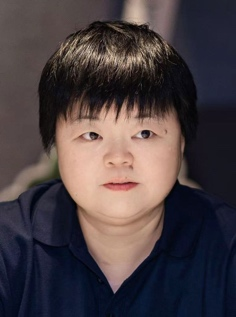
 | Prof. Song GuoThe Hong Kong University of Science and Technology, China Song Guo is a Chair Professor in the Department of Computer Science and Engineering at the Hong Kong University of Science and Technology. Prof. Guo made fundamental and pioneering contributions to the development of edge AI and machine learning systems. He has published many papers in top venues with wide impact in these areas and has been consistently recognized as a Clarivate Highly Cited Researcher. He is the recipient of IEEE 2024 Edward J. McCluskey Technical Achievement Award. Prof. Guo is the Editor-in-Chief of IEEE Transactions on Cloud Computing. He is a Fellow of the Canadian Academy of Engineering, a Member of Academia Europaea, and a Fellow of the IEEE. Speech Title: World Model-Driven Embodied Intelligence |
 | Prof. Bin XiaoThe Hong Kong Polytechnic University, China Bin Xiao is a professor at the Department of Computing, the Hong Kong Polytechnic University, Hong Kong. Prof. Xiao received the B.Sc and M.Sc degrees in Electronics Engineering from Fudan University, China, and a Ph.D. degree in computer science from the University of Texas at Dallas, USA. His research interests include AI security, data privacy, Web3, and blockchain systems. He is currently an Associate Editor of the IEEE Transactions on Information Forensics and Security, IEEE Transactions on Cloud Computing. He has been the associate editor of theIEEE Internet of Things Journal, IEEE Transactions on Network Science and Engineering, andElsevier Journal of Parallel and Distributed Computing.He is theIEEE Fellow, IEEE ComSoc Distinguished Lecturer, and the chair of the IEEE ComSoc CISTC committee from 2024 to 2025. He has been the program co-chair of IEEE CNS2025, track co-chair of IEEE ICDCS2026, ICDCS2022, the symposium track co-chair of IEEE Globecom 2024, ICC2020, ICC 2018, and Globecom 2017, and the general chair of IEEE SECON 2018. Speech Title: Web 3.0 Security and Applications |
| Prof. Kun XieHunan University, China Kun Xie is a Second‑Level Professor and Ph.D. supervisor at Hunan University. She is a recipient of the National Science Fund for Distinguished Young Scholars, the China Young Female Scientist Award, the Hunan Provincial Distinguished Young Scholars Fund. She has also been honored as Hunan Provincial Young Backbone Teacher, Hunan Provincial Excellent Master Supervisor, Changsha "Women Achievers" Model, and Hunan University Research Model. She serves as Director of the Key Laboratory of Supercomputing‑AI Converged Computing, Ministry of Education, and Chair of both the Academic Committee and Degree Committee of the College of Information Science and Engineering, Hunan University. Her long‑term research interests cover computer networks, network security, network measurement, and artificial intelligence. She has published more than 100 papers in top‑tier international conferences and journals including SIGMOD, CCS, INFOCOM, ICDE, SIGMETRICS, IEEE/ACM TON, IEEE TMC, IEEE TIFS, IEEE TDSC, IEEE TPDS, IEEE TSC and IEEE TC. Speech Title: From "Observation Void" to Accurate Observability: Theory and Practice of Network Measurement |
 | Prof. Zheng YanXidian University, China Zheng Yan is a professor and at Xidian University, a "Huashan Distinguished Professor", an External Member of Finnish Academy of Science and Letters, an IEEE Fellow, an IET Fellow, an AAIA Fellow, an AIIA Fellow, a top 2% global scientist (2019-present), an Elsevier Highly Cited Chinese Researcher (2020-present), and a top 0.05% global scholar in ScholarGPS (2024 list for the past 5 years). He has long been committed to research in trust management, blockchain, information and network security, privacy protection, and data analysis. He innovatively proposed a trust management mechanism that adapts to dynamic changes in trust and protects privacy, and invented a series of security and privacy protection technologies governed by trust, which are widely used in next-generation wireless communication networks, ubiquitous social networks, cloud computing, the Internet of Things, and embedded software. In the past 10 years, he has been working on and completed more than 30 projects, including key R&D projects funded by the Ministry of Science and Technology, key and general projects funded by the National Natural Science Foundation of China, and international collaborations. He has published over 460 papers in major domestic and international journals and conferences, of which more than 280 are indexed by SCI; he has led the invention of over 220 international and domestic patents, and many of his patented technologies have been adopted by international standards. Speech Title: Decentralized Trust Management with Privacy Preservation |